A Unique Project: A Bespoke Artist’s Support for Essential Tremor.
There is a real satisfaction that comes from finishing a project, running your hand over the smooth grain of European oak, and knowing it’s exactly what the client asked for. But every so often, a commission comes along that isn’t just about aesthetics or storage; it’s about aiding capability.
I recently had the pleasure of designing and building a specialist artist’s box for a client living with an essential tremor. For those who aren’t familiar, an essential tremor is a neurological condition that causes involuntary rhythmic shaking. While it can affect various parts of the body, it is often most prominent in the hands. For an artist, this presents a frustrating barrier to the very thing they love to do.
The brief was simple in theory but required careful execution: create a stable, comfortable platform that allows the artist to rest their forearms and wrists, thereby dampening the tremor and providing the control needed for fine detail work.
Form Meets Function: The Material Choice
When choosing the materials, Oak was the natural frontrunner. I wanted the box to have a significant weight to it. Stability was paramount; the last thing an artist needs is their support sliding across the desk mid-stroke. The weight of the oak ensures the box stays exactly where it’s placed.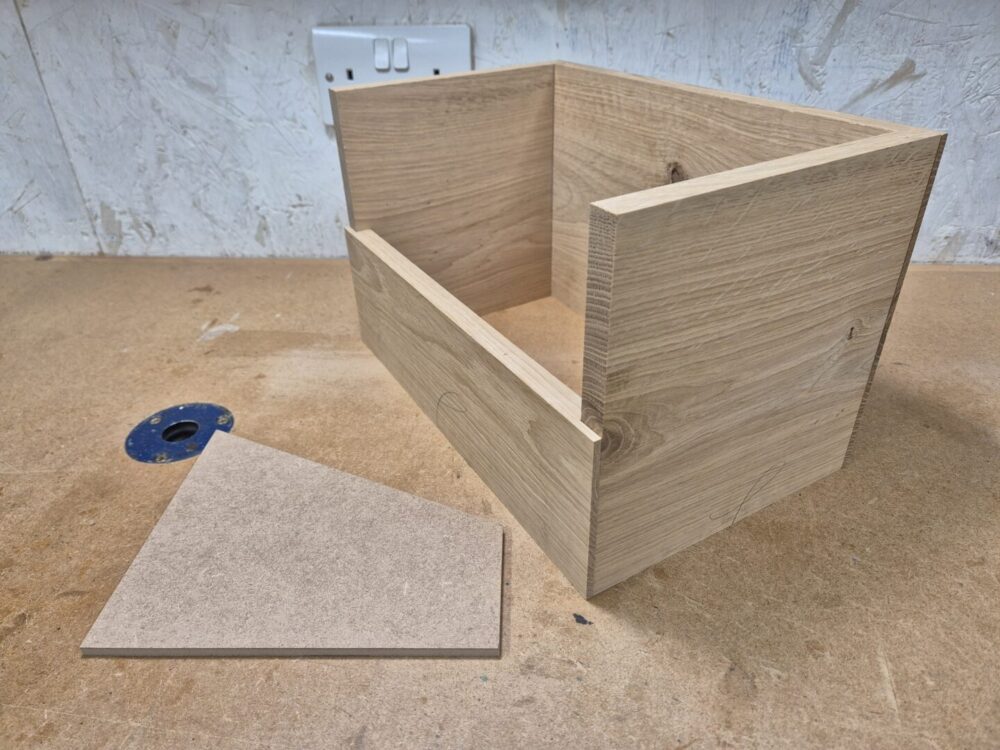
Beyond the weight, there is the timeless beauty of the wood. Using high-quality timber elevates the piece from being a studio aid to a professional piece of equipment.
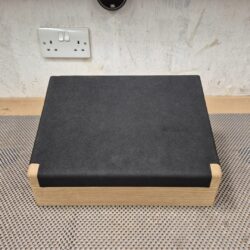
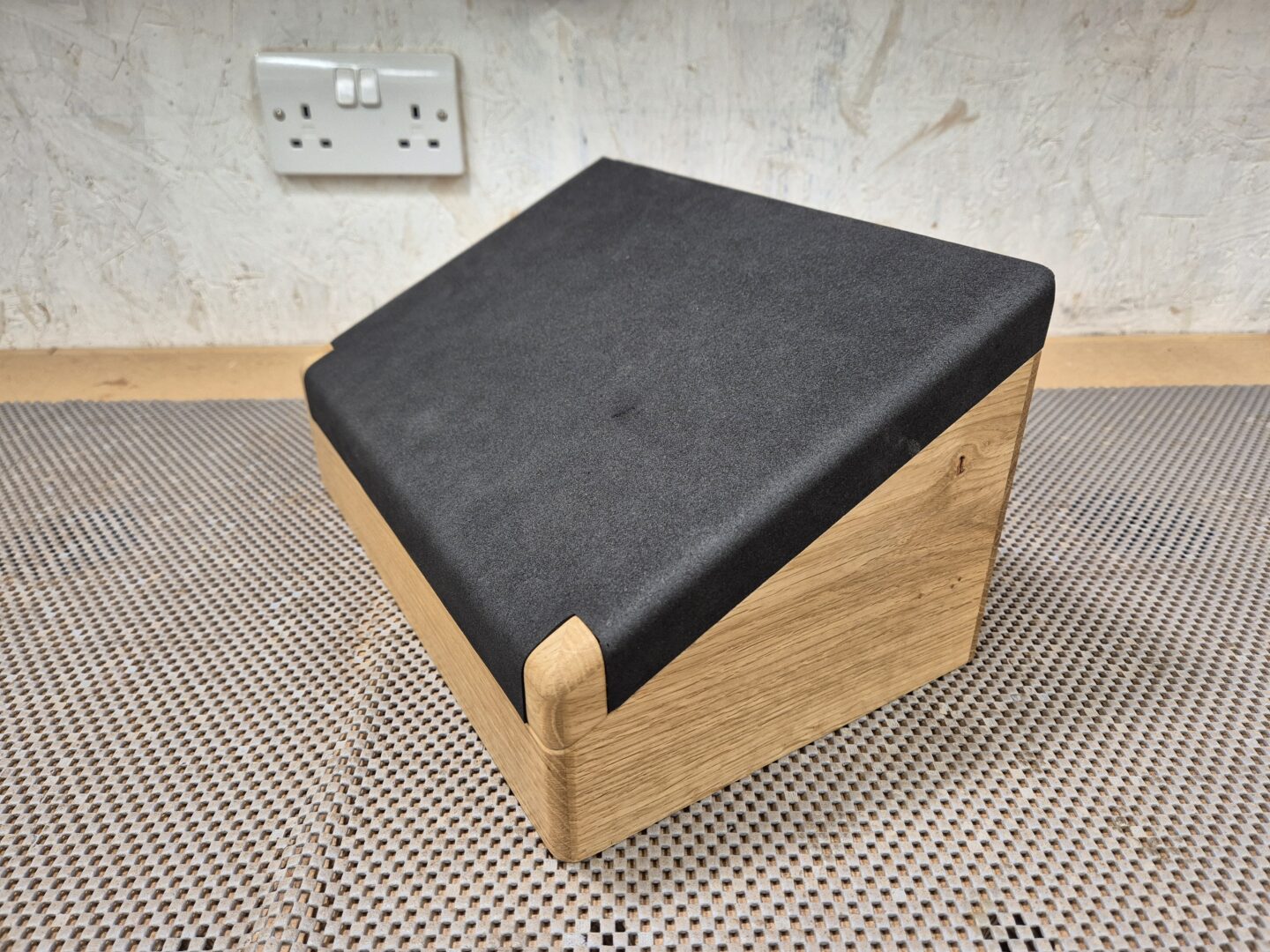
For the top surface, I moved away from traditional wood or leather and opted for Neoprene. If you’ve ever worn a wetsuit, you know the material is durable and slightly cushioned. In this context, neoprene serves two vital purposes:
- Grip: It provides a soft, high-friction surface that prevents the artist’s arms from slipping.
- Pressure Distribution: Resting your weight on a hard wooden edge for hours can lead to fatigue or “pins and needles.” The neoprene offers just enough compression to make long painting sessions comfortable.
Design Details and Accessibility
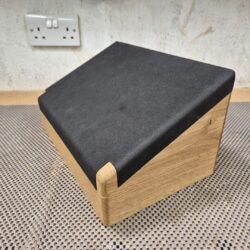
The geometry of the box was dictated by ergonomics. The incline is designed to follow the natural angle of the arm when seated at a standard drafting table or easel. I also incorporated a wraparound corner detail where the oak meets the neoprene. By rounding over the edges, I ensured there are no sharp points to dig into the wrists—a small detail that makes a world of difference during a four-hour session.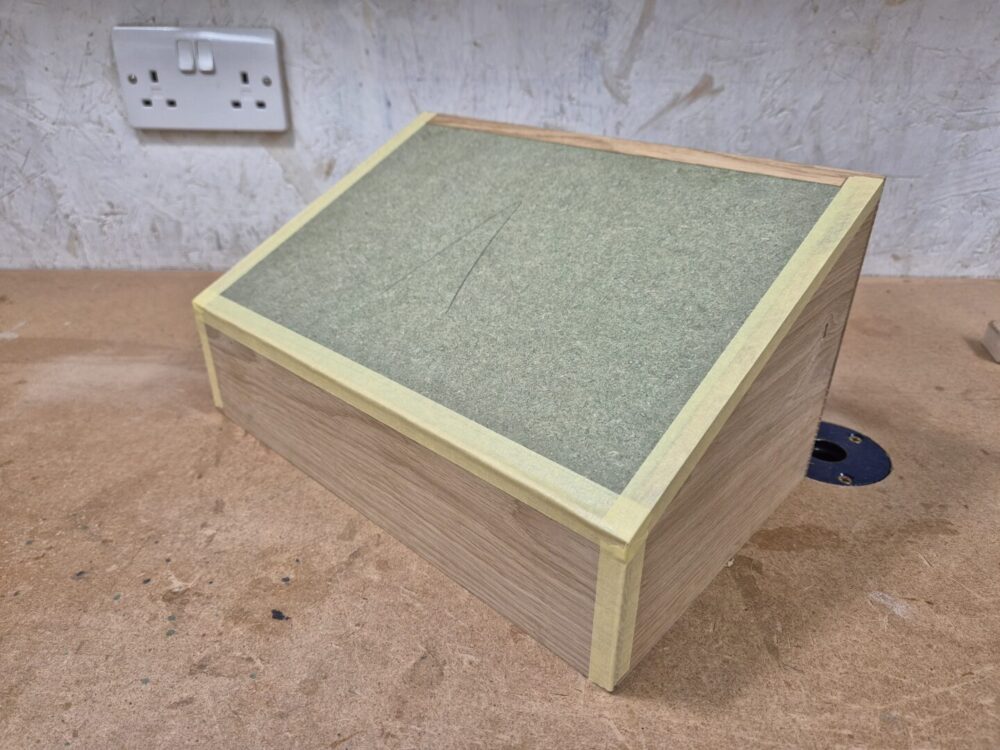
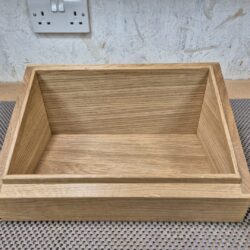
One of my favourite features is the included storage. While the primary goal was support, studio space is always at a premium. The neoprene-clad lid is completely removable, lifting off to reveal a spacious storage compartment underneath. This allows the client to keep their most-used brushes, palettes, and tubes of paint right where they need them, keeping the workspace decluttered and organised.
The Impact of Inclusive Design
As makers, we often get caught up in the “how”—the joinery, the finishing, the grain orientation. But this project had to be more about the “why.”
Inclusive design isn’t about making “special” products; it’s about removing barriers. By providing a solid, cushioned foundation, we managed to mitigate the physical effects of the tremor. It’s a tool that provides more than just a place to rest an arm; it provides the confidence to keep creating.
There is a profound difference between a mass-produced plastic slope and a hand-finished oak box. The former feels clinical; the latter feels like an invitation to work. It’s a piece of kit that looks right at home in a professional studio, proving that accessibility and high-end aesthetics can, and should, go hand-in-hand.
Final Thoughts
This project was a practical exercise in trying to solve a specific problem. It was less about making something “pretty” and more about ensuring the dimensions and materials worked for the client’s physical needs. It was a reminder that sometimes function is more important than form.
Building this bespoke box showed that a few simple design changes—like the angle of the slope or the choice of a non-slip surface—can make a massive difference to how someone works.
If you are thinking about a bespoke handmade box contact me and let’s have a chat.